This blogpost is a part of Thinking Activity on Wole soyinka's play A Dance of the forest assign by Megha Ma'am, Department of English, Maharaja Krishnakumarsinhji Bhavnagar University.
Wole Soyinka: A Literary and Political Icon
Akinwande Oluwole Babatunde Soyinka, popularly known as Wole Soyinka, is a Nigerian playwright, poet, novelist, and political activist. Born on July 13, 1934, in Abeokuta, Nigeria, Soyinka is one of Africa’s most celebrated literary figures. In 1986, he became the first African writer to be awarded the Nobel Prize in Literature, a recognition of his profound contributions to world literature. His works often engage with themes of history, mythology, postcolonial identity, and political corruption.
Wole Soyinka
plays
A Dance of the Forests (1960) – Written for Nigeria’s independence celebrations, this play critiques both colonial history and post-independence leadership, warning against repeating past mistakes.
The Strong Breed (1963) – A symbolic drama about sacrifice and renewal, exploring themes of ritual cleansing and social responsibility.
Kongi’s Harvest (1965) – A political satire that criticizes dictatorship and the abuse of power in postcolonial Africa.
Death and the King’s Horseman (1975) – One of his most famous plays, based on a real historical event where British colonial authorities intervened to stop a ritual suicide, causing a cultural and moral crisis.
The Road (1965) – A philosophical play that explores fate, death, and spirituality through the experiences of a group of Nigerian drifters.
1)Write a proposed alternative end of the play 'A Dance of the Forest' by Wole Soyinka.
Alternative Ending: The Dance of Redemption
As the play nears its conclusion, instead of the living rejecting the Dead Man and Dead Woman, they are forced to witness a final, transformative vision created by Forest Head. The spirits of the forest gather around the totem, which suddenly comes alive, revealing scenes from both past and future. The living characters—Demoke, Adenebi, Rola, and others—see their future selves trapped in an endless cycle of violence, corruption, and decay unless they acknowledge their past mistakes.
Demoke, now fully aware of his crime against Oremole, stands before Ogun and begs for atonement. Instead of punishing him, Ogun tells Demoke that true redemption lies in carving not for power or pride, but for the spirit of the people. He is given the choice to either destroy the totem, erasing history, or let it stand as a reminder of past sins. Demoke hesitates but ultimately decides to leave it untouched, symbolizing a willingness to confront history rather than erase it.
Meanwhile, Rola is forced to face the spirits of those she manipulated and betrayed. Rather than succumbing to shame, she breaks down in tears, realizing for the first time that she has been a puppet of her own desires. She renounces her past ways and decides to retreat into the forest, becoming a wandering storyteller who warns others of repeating history’s mistakes.
Adenebi, exposed as a hypocrite, is cursed by the spirits to forever hear the voices of those who perished due to his selfish actions. He flees into the darkness, haunted by the voices, forever unable to escape his guilt.
Finally, Forest Head declares that the dead will now return to their realm, but they leave behind one final warning: "If the living continue to silence the past, they will only invite its return." The Half-Child, representing the unborn future, steps forward and whispers, "The choice is yours."
As the spirits vanish, the totem begins to glow, and the forest itself starts to shift—turning from a place of judgment into one of renewal. The characters are left standing in silence, realizing that they must now decide their own future.
The play ends with a single drumbeat, signaling a new beginning—whether for better or worse remains unknown.
A Critical Note on A Dance of the Forests by Wole Soyinka
Wole Soyinka’s A Dance of the Forests is a complex and highly symbolic play that was first performed in 1960 as part of Nigeria’s independence celebrations. Unlike other works that glorified pre-colonial African history or celebrated independence with optimism, Soyinka’s play offered a stark and cautionary perspective. He challenges the idealized view of the past and warns that without self-examination, the newly independent nation is at risk of repeating its historical mistakes. Through a mixture of myth, history, and political allegory, A Dance of the Forests serves as both a critique of Nigeria’s past and a warning for its future.
One of the central themes of the play is the cyclical nature of history. Soyinka suggests that societies, especially postcolonial ones, are prone to repeating the same injustices and failures unless they confront their past honestly. This is reflected in the structure of the play, where the past and present merge. The living characters—Demoke, Rola, and Adenebi—are confronted with figures from history, such as the Dead Man and the Dead Woman, who represent forgotten or ignored historical truths. Instead of welcoming them, the living characters attempt to reject their past, symbolizing a society that refuses to learn from its history. By portraying the past as something that cannot be escaped, Soyinka urges the audience to acknowledge history rather than romanticize or erase it.
The play also explores the intersection of politics and culture in a newly independent Nigeria. At the time of independence, there was an expectation that once colonial rulers left, the nation would naturally progress toward prosperity and justice. However, Soyinka, through characters like Adenebi (a corrupt historian) and Rola (a manipulative woman who embodies self-interest), highlights the dangers of internal corruption. He suggests that the problem is not just colonial oppression but also the moral failures of Nigerian leaders and citizens themselves. This aligns with Frantz Fanon’s ideas in The Wretched of the Earth, where he warns that the newly independent elite often replaces colonial rulers without changing the oppressive structures of power. Soyinka critiques this phenomenon by showing how the living characters, despite gaining independence, still exhibit greed, betrayal, and dishonesty.
Another major aspect of the play is the use of Yoruba mythology and ritual. Unlike Western plays that rely on linear storytelling and psychological character development, A Dance of the Forests is structured around ritual, dance, and spiritual symbolism. Characters like Forest Head, Ogun, and Eshuoro are drawn from Yoruba religious beliefs and serve as forces guiding or testing the human characters. Forest Head, in particular, acts as a divine figure who oversees the judgment of the living, ensuring that they face the consequences of their actions. The presence of rituals, such as Demoke’s final act of expiation, aligns the play with traditional African storytelling, where myth and reality are intertwined. This emphasis on indigenous traditions also positions Soyinka within the postcolonial debate—he seeks to create a uniquely African dramatic form rather than imitating Western theatrical conventions.
The role of the artist in society is another critical theme in the play, embodied by Demoke, the carver. As an artist, Demoke struggles with his past sins, particularly his responsibility for the death of his apprentice, Oremole. His journey mirrors Soyinka’s view that artists must not only create but also confront the truth, even when it is uncomfortable. Through Demoke, Soyinka presents the artist as someone who carries both the burden of the past and the responsibility of shaping the future. His act of climbing the totem pole at the end of the play, despite the risks, symbolizes the artist’s duty to engage with history and challenge corruption. This theme reflects Soyinka’s own life, as he often used his art to criticize political leaders and expose social injustices.
Another distinctive aspect of A Dance of the Forests is its experimental structure and use of language. Unlike traditional Western drama, which follows a clear three- or five-act structure, Soyinka’s play is fragmented and moves fluidly between different times and spaces. The past and present are interwoven, and characters appear in multiple forms, emphasizing the cyclical nature of human folly. The language of the play also varies—some characters speak in bureaucratic jargon, others use poetic and ritualistic dialogue, and there are moments of satire and dark humor. This variety reflects the complexity of Nigerian society, where multiple traditions, languages, and worldviews coexist.
From a postcolonial perspective, A Dance of the Forests is a powerful critique of both colonialism and the failures of post-independence leadership. While some postcolonial writers, like Ngugi wa Thiong’o, advocate for writing in indigenous languages to resist imperial influence, Soyinka chose to write in English. This decision has been debated—some argue that it limits his ability to connect with Nigerian audiences, while others see it as a strategic way to engage a global readership. Nonetheless, Soyinka’s use of English does not diminish the play’s deep engagement with Yoruba traditions and African philosophical thought. He blends indigenous storytelling methods with modern political concerns, creating a theatrical form that is both deeply rooted in African culture and accessible to international audiences.
Despite its brilliance, the play has also been criticized for its complexity and obscurity. Some critics argue that Soyinka’s use of symbolism and non-linear narrative makes the play difficult to understand. Indeed, the second half of the play, which features abstract choric passages from spirits and a surreal sequence involving the Half-Child, can be challenging to follow. However, Soyinka himself defended this approach, arguing that his plays were not meant to provide simple messages but to challenge the audience to think critically. He believed that theater should not just entertain but provoke, making people question their assumptions about history, power, and justice.
In conclusion, A Dance of the Forests is a groundbreaking work that remains relevant today. It forces audiences to confront uncomfortable truths about history, corruption, and human nature. By blending mythology with political critique, Soyinka creates a play that is both timeless and deeply specific to Nigeria’s postcolonial reality. Although its complexity may make it challenging for some audiences, its message about the dangers of forgetting the past and failing to take responsibility for the future is universal. Through its rich symbolism, innovative structure, and powerful themes, A Dance of the Forests stands as one of the most significant plays in African literature, urging us to reflect on history not as a distant memory but as an ever-present force shaping our world.
Words: 1667
Images: 2
References:
Soyinka, Wole.A Dance of the Forests. Oxford University Press, 1963.
This blog is written as part of a task assigned by Prof. Dilip Barad, Department of English (MKBU). The blog is about my understanding of literature and how literature shaped me?
Literature, to me, is more than just words on a page; it is a vast ocean of human experience, emotions, and ideas. It transcends time and space, allowing us to connect with people, cultures, and thoughts that we might never encounter otherwise. Before I formally studied literature, I saw books as mere stories—entertaining, sometimes thought-provoking, but nothing beyond that. However, my perspective evolved as I delved deeper into literary analysis and critical theory, realizing that literature is a powerful force that shapes minds and societies.
What is Literature?
Literature is the collection of stories, ideas, and experiences that help us understand what it means to be human. It’s more than just entertainment—it’s a way of reflecting on life and the world we live in. Through literature, we can see different perspectives, connect with characters whose experiences are far from our own, and better understand the complexities of human emotions and behavior. It allows us to explore feelings we might not always be able to express ourselves. Whether it’s through the pages of a novel, a poem, or a play, literature captures the essence of human life, making it something we can relate to, even if the world it describes is completely different from our own.
Why Does Literature Matter?
Literature is important because it challenges our thinking and helps us grow. It opens our eyes to new ideas and experiences we might not have considered. For example, books like To Kill a Mockingbird by Harper Lee made me think deeply about justice, racism, and moral courage. It wasn’t just a story; it was a way of seeing the world from another person’s point of view, and that experience changed the way I think. Literature doesn’t just entertain—it makes us question what we know and understand the world more clearly. It has the ability to open our minds, teach empathy, and inspire creativity. The more I read, the more I realize that literature connects us all—it helps us understand the challenges and joys that others face, and in turn, it helps us connect with our own humanity.
Literature as a Lighthouse: My Personal Metaphor
A lighthouse does not calm the sea or stop the storm, but it provides light to those lost in the dark. Literature has done the same for me. It has not solved all my problems, but it has helped me understand the world, guiding me through confusion, doubts, and difficult times.
Just like a lighthouse warns sailors about hidden dangers, literature has revealed the unseen truths of society. When I read The White Tiger by Aravind Adiga, I saw how power and corruption shape people’s lives. It made me question the systems around me, just as a lighthouse helps sailors see what lies beneath the surface. Similarly, The Ministry of Utmost Happiness by Arundhati Roy showed me the pain of those pushed to the margins of society. It reminded me that even in darkness, people search for love, identity, and purpose—just like lost ships looking for a guiding light.
A lighthouse does not tell sailors where to go—it only shows them that a path exists. Literature has done the same for me. It has shaped the way I think, helped me see beyond my own experiences, and given me light in moments of uncertainty. I may not always know my destination, but with literature as my lighthouse, I know I will never be completely lost.
A lighthouse does not erase the darkness, nor does it change the course of the sea. It simply stands tall, unwavering, offering light to those who seek it. That is what literature has been for me—a steady, guiding presence through the storms of life. It has not given me certainty, but it has given me clarity. It has not handed me a destination, but it has assured me that there is always a way forward.
How Literature Shaped me?
Studying literature has opened my eyes to so many different aspects of the world. One of the most important lessons literature has taught me is how deeply it reflects society and the problems we face. For example, reading Animal Farm by George Orwell gave me a new perspective on politics and power. Before reading this book, I didn’t fully understand how easily power could corrupt those in charge and how systems could be manipulated for selfish gain. Orwell’s critique of political systems made me think critically about how politics works in real life and how important it is to hold leaders accountable. It helped me realize that the problems in society—like inequality, oppression, and corruption—are often much more complex than we might think.
Literature has also made me more aware of social issues like the rights of LGBTQ individuals. I remember reading Orlando by Virginia Woolf, a novel that challenges ideas about gender and identity. Orlando’s journey through time, changing gender and identity, made me think more about the way society labels people and how these labels can limit freedom and understanding. It opened my eyes to the struggles that people in the LGBTQ community face and made me more empathetic to their experiences.
But literature hasn’t just influenced my understanding of these broad societal issues; it’s also shaped my views on more personal, complex matters—such as the absurdity and tragedy surrounding suicide. In books like The Bell Jar by Sylvia Plath and through modern cultural studies and media representations, I began to see how society often deals with mental health and depression in an absurdly detached way. It was not just the novels, but also TV shows and even the way suicide is portrayed in popular culture that made me reflect on the real-life consequences of societal indifference. These portrayals often present suicide as a final, solitary act without examining the emotional turmoil or social isolation that leads to such decisions. Literature made me question why society tends to stigmatize mental health struggles instead of addressing the deeper societal issues at play—issues like alienation, lack of empathy, and the pressures of perfectionism.
Reading these texts helped me see the absurdity of how we often expect individuals to overcome such complex, emotional challenges on their own. It’s made me more sensitive to the struggles of others, pushing me to be more aware of how we, as a society, talk about—and avoid—these difficult conversations.
Reading these texts helped me see the absurdity of how we often expect individuals to overcome such complex, emotional challenges on their own. It’s made me more sensitive to the struggles of others, pushing me to be more aware of how we, as a society, talk about—and avoid—these difficult conversations. The absurdity of how society treats mental health and suicide is something literature taught me to confront, not ignore, and it has shaped how I approach these topics in both my personal life and my work.
Through these books and countless others, I’ve come to see literature as a way of understanding the world’s problems more clearly. It’s not just about the characters or the story—it’s about how these stories make us reflect on society’s issues and how we, as individuals, can make a difference. Literature has also taught me to be more aware of my own privilege and to question my assumptions. It’s made me more active in thinking about the world’s injustices and how I can contribute to positive change.
Finally, literature has shaped me in terms of my personal growth. It’s made me more empathetic, more creative, and more thoughtful. I’ve learned to express my emotions and ideas better, and I’ve come to appreciate the power of words in creating change. Through literature, I’ve become more aware of the power of storytelling and how it can influence not just the individual but society as a whole.
Conclusion
Looking back on my journey with literature, I realize just how much it has shaped me into a more thoughtful, empathetic, and self-aware person. It has given me the ability to see the world through different lenses, helping me understand both societal issues and my own feelings. Literature has taught me the importance of questioning what I know, reflecting on the world around me, and thinking critically about the systems that govern our lives.
A lighthouse does not erase the darkness, nor does it change the course of the sea. It simply stands, unwavering, offering light to those who seek it. That is what literature has been for me—a steady, guiding presence through the storms of life. It has not given me certainty, but it has given me clarity. It has not handed me a destination, but it has assured me that there is always a way forward.
Video 1 : Introduction | Character | Plot Summary | The Only Story | Julian Barnes
The first video introduces Julian Barnes' novel The Only Story, focusing on its narrative structure, characters, and plot. The novel employs a shifting narrative pattern, transitioning from the first-person perspective to the second-person and eventually to the third-person. This gradual shift mirrors the protagonist Paul’s changing perception of his past, moving from youthful certainty to reflective detachment. The story follows Paul and his unconventional relationship with Susan Macleod, an older married woman. Other key characters include Robert, Susan’s abusive husband; Mr. Gordon and Martha Macleod, her conservative parents; Eric and Joan, Paul’s friends; Anne, a later romantic interest; and Clara Macleod, Susan’s daughter. The timeline traces Paul’s journey from passionate love to eventual disillusionment, emphasizing the emotional toll of memory and regret.
A similar exploration of memory and subjective truth appears in Barnes' The Sense of an Ending (2011), where Tony Webster’s recollections are challenged by new revelations. Like Paul, Tony reflects on a past love, Veronica Ford, and his intellectual friend, Adrian Finn. Both novels question how we remember and interpret our personal histories, exposing the unreliability of memory and the weight of past choices.
Video 2: Joan | Character Study | The Only Story | Julian Barnes
The second video provides a character study of Joan in The Only Story by Julian Barnes. Joan is portrayed as a middle-aged woman who has endured significant emotional suffering, including the loss of her brother, Gerald, and an unhappy marriage with Gordon. Despite these hardships, Joan finds a form of emotional survival through her pet dogs, which serve as her source of comfort. The video highlights the symbolic significance of her latest pet dog, Sibyl, whose name alludes to the cursed prophetess of Greek mythology, emphasizing the idea that immortality can be a burden rather than a gift. Through Joan’s character, Barnes explores the theme of suffering and the idea that death can sometimes be perceived as an ultimate release from a life filled with pain. This theme resonates with Barnes' The Sense of an Ending (2011), where the protagonist Tony Webster also grapples with the complexities of memory, regret, and existential closure.
Video 3: Memory Novel | Memory and History | Memory and Morality | The Only Story | Julian Barnes
The video explores the theme of memory in Julian Barnes’ The Only Story, examining its relationship with history and morality. “History is collective memory, memory is personal history, trauma is memory.” The novel delves into how trauma shapes memory, the imperfections of recollection, and how memory acts as a filter, prioritizing certain events while distorting others. The speaker references postcolonial critic Dipesh Chakrabarty’s discussion on trauma as memory, connecting it to Barnes’ The Sense of an Ending, which also questions the reliability of personal recollection.
Additionally, the video draws parallels to Christopher Nolan’s film Memento, where memory loss impacts moral responsibility. Literary references include Edgar Allan Poe’s The Tell-Tale Heart, Hamlet’s Claudius’ confession, and Nathaniel Hawthorne’s The Scarlet Letter, all illustrating how guilt, trauma, and memory are intertwined. The video also touches on the subaltern perspective, referencing Eric, Paul’s friend, and Max Verstappen, a 19-year-old driver, as part of a broader discussion on memory’s influence on identity and morality.
Video 4: Narrative Pattern | The Only Story | Julian Barnes
The narrative pattern in Julian Barnes’ The Only Story, highlighting its classical structure with a postmodern twist. The novel follows a nonlinear timeline, shifting between the protagonist Paul’s memories as a 19-year-old and his reflections as a 70-year-old. This fragmented storytelling serves as a metaphor for memory’s fluidity and unreliability. Paul is presented as an unreliable narrator, reflecting the postmodern notion that memory is subjective and often distorted.
The novel employs a shifting narrative perspective, transitioning from first-person to second-person and finally to third-person, mirroring Paul’s evolving detachment from his past. Barnes also incorporates philosophical broodings and authorial comments, adding depth to Paul’s reflections on love and loss. The video references Dr. Samuel Johnson’s 1755 definition of a novel, aligning The Only Story with the tradition of intimate, life-changing love stories. This narrative style resonates with Barnes’ broader themes of memory, identity, and the impermanence of love.
Video 5: Question of Responsibility | The Only Story | Julian Barnes
This video explores the theme of responsibility in Julian Barnes’ The Only Story, focusing on the protagonist Paul Roberts’ struggle with guilt and accountability. Paul grapples with the question of whether his choices were a result of youthful carelessness or if external factors, such as Susan’s abusive marriage to Gordon, led to their relationship. The novel presents responsibility as a complex and often ambiguous concept, resisting simple answers.
A key metaphor in the novel is that of a chain, where each link represents different aspects of responsibility—some strong, others fragile. The chain can break or hold depending on the circumstances, symbolizing the delicate balance of personal and moral accountability. Additional metaphors, such as trees in a cyclone and a snake passing through a carpenter’s workshop, illustrate the unpredictability and fragility of responsibility. Barnes ultimately suggests that responsibility is neither absolute nor singular but shaped by a web of interwoven causes and consequences.
Video 6 : Theme of Love | Passion and Suffering | The Only Story | Julian Barnes
The intertwined themes of love, passion, and suffering in Julian Barnes’ The Only Story. The novel opens with the central question: “Would you rather love more and suffer more, or love less and suffer less?”—a reflection on whether deep love is worth the inevitable pain it brings. The speaker discusses the etymology of “passion,” derived from the Latin root patior (to suffer), highlighting how modern usage often overlooks its connection to suffering.
Barnes presents love as a force that is both exhilarating and destructive. Paul’s relationship with Susan begins with passion but gradually turns into an experience of deep suffering as he witnesses her decline. His life unfolds through three love stories, each shaping his understanding of love’s complexity. By the novel’s end, Paul reaches a form of acceptance, but his past relationships leave an indelible mark, reinforcing Barnes’ view that love and suffering are inseparable.
Video 7: Theme of Marriage | Critique of Marriage Institution | The Only Story | Julian Barnes
Julian Barnes’ critique of the institution of marriage in The Only Story. The novel portrays marriage as a restrictive and often disillusioning institution, arguing that love and marriage are opposites—marriage is not the goal of love but rather its end. Barnes presents marriage as a structure that suppresses passion and fosters suffering, emphasizing its flaws through characters like Susan and Gordon Macleod.
The novel also contrasts traditional marriage with modern alternatives, such as live-in relationships and divorce, which have gained acceptance in Western societies. However, despite these alternatives, marital strife and domestic violence remain prevalent. Barnes employs humor and sharp comparisons to highlight the contradictions and societal expectations surrounding marriage. Through Paul’s perspective, the novel questions whether love can survive within the confines of marriage, ultimately suggesting that while love may be idealized, marriage often leads to compromise, loss, and emotional turmoil.
Video 8: Two Ways to Look at Life | The Only Story | Julian Barnes
This video explores two contrasting perspectives on life in Julian Barnes’ The Only Story. The first perspective sees life as a series of conscious choices, where individuals act as the captain of a paddle steamer, navigating the river of life. Each decision eliminates other possibilities, potentially leading to regret, but it also underscores personal responsibility and free will. Paul’s choices—especially his relationship with Susan—reflect this perspective, as he actively shapes his own fate.
The second perspective presents life as inevitable and predetermined, comparing human existence to a bump on a log, helplessly carried by the river’s currents. This view suggests that prehistory and circumstances dictate one’s path, leaving little room for autonomy. Barnes contrasts these two outlooks throughout the novel, questioning whether love, suffering, and fate are within human control or merely the result of an inescapable flow of events. Paul’s journey oscillates between these views, deepening the novel’s existential inquiry.
Key Takeaways from The Only Story
1. Love and Suffering Are Connected
The novel shows that love is not just about happiness; it often brings pain and suffering. Barnes suggests that love always comes with suffering, and people must decide whether they are willing to accept that pain for the sake of love. This is significant because it challenges the idea of love as purely joyful. It forces the reader to think about whether deep love is worth the emotional pain it brings.
Example: Paul’s love for Susan begins as something exciting and passionate, but as she struggles with alcoholism, his love turns into responsibility and suffering.
2. The Unreliability of Memory
Memory is subjective, and Barnes shows how people remember things differently based on their emotions and experiences. Paul narrates his story in different voices—first, second, and third person—showing how memory is fluid and changes over time. This is important because it highlights how personal experiences shape the way we see the past, making it difficult to determine the absolute truth.
Example: In The Sense of an Ending, Tony believes he remembers his past accurately, but later realizes his memory was incomplete. Similarly, Paul’s version of events in The Only Story is questionable, showing that memory is often unreliable.
3. The Critique of Marriage and Social Expectations
Barnes questions whether marriage is truly the best way to express love. The novel suggests that marriage often kills love rather than nurtures it. This is significant because it challenges traditional ideas about relationships, showing that societal expectations can sometimes trap people in unhappy situations.
Example: Susan’s unhappy marriage with Gordon, filled with domestic violence, contrasts with Paul’s passionate love affair with her. However, even their unconventional love does not last, raising questions about whether any relationship can escape societal pressures.
Character Analysis from The Only Story
Paul Roberts is the protagonist and narrator of the novel. His story revolves around his passionate yet painful love affair with Susan, which shapes his understanding of love, memory, and responsibility. Initially, Paul is an idealistic young man who believes that love should be free from social norms and conventions. However, as Susan’s struggles with alcoholism worsen, he is forced to confront the harsh realities of love and suffering. His character reflects the theme of love’s transformative and often painful nature. The shifting narrative perspective—from first-person to second- and third-person—emphasizes Paul’s changing emotions and highlights the unreliability of memory, making the reader question his version of events. Through Paul, Barnes explores the idea that love is not just about passion but also about endurance, regret, and loss.
Susan Macleod plays a crucial role in Paul’s emotional journey. She is an older woman trapped in an unhappy marriage, and her affair with Paul offers her a temporary escape. Susan is both independent and vulnerable—while she initially appears as a free-spirited woman, her emotional wounds and alcoholism reveal her deep suffering. Paul’s perspective shapes how the reader sees Susan, as he first idealizes her but later views her with frustration and helplessness. Susan’s character highlights the novel’s critique of marriage and the complexities of love. Her eventual downfall reinforces the theme of love and suffering, showing how relationships can become burdens rather than sources of happiness. Through Susan, Barnes also raises questions about responsibility—Paul tries to save her, but ultimately, love alone is not enough to heal her pain.
Narrative Techniques
Julian Barnes employs a unique narrative style in The Only Story, making use of first-person narration, shifting perspectives, and a non-linear timeline to explore the themes of love, memory, and regret. The novel begins with a first-person perspective, allowing readers to experience Paul’s emotions intimately. However, this narration is limited as it only presents Paul’s version of events, making the reader question whether his account is entirely truthful or clouded by nostalgia. As the story progresses, Barnes shifts from first-person to second- and third-person perspectives, reflecting Paul’s emotional detachment and his struggle to make sense of his past. This technique reinforces the idea of an unreliable narrator, as Paul himself doubts the accuracy of his memories.
Additionally, the novel’s non-linear timeline, with constant jumps between past and present, mirrors the fragmented nature of memory, showing how love and trauma shape one’s recollection of events. Flashbacks play a crucial role in revealing Susan’s struggles and the evolution of Paul’s emotions, creating a layered and reflective storytelling experience. These techniques make the reader more engaged, encouraging them to piece together the story rather than passively accept Paul’s version. Compared to conventional novels with chronological storytelling, The Only Story stands out with its fluid and introspective structure, resembling Barnes’ earlier work The Sense of an Ending, which also deals with memory’s imperfections and the subjective nature of truth. This narrative style immerses the reader in Paul’s inner turmoil, making the novel a deeply personal yet thought-provoking meditation on love and loss.
Thematic Connections in The Only Story
Julian Barnes’ The Only Story intricately weaves together themes of memory, love, responsibility, and existential perspectives to explore the complexities of human relationships and personal growth.
Memory and Unreliability play a crucial role in the novel, as Paul’s recollections are subjective and fragmented. The shifting perspectives—moving from first to second and third person—highlight the unreliability of memory, emphasizing that personal history is shaped as much by forgetting as by remembering. Barnes suggests that history is collective memory, while memory is personal history, reinforcing the idea that truth within a narrative is fluid rather than absolute.
Love, Passion, and Suffering are central to the novel, illustrating love as both a source of ecstasy and deep anguish. Paul’s affair with Susan begins as passionate and liberating, but it eventually descends into suffering due to her emotional wounds and alcoholism. This aligns with Lacanian ideas about desire, where love is rooted in a fundamental lack—an unattainable wholeness that leads to both longing and pain. The novel questions whether love is truly worth suffering for, echoing its opening dilemma: Would you rather love more and suffer more, or love less and suffer less?
Responsibility and Cowardice are evident in Paul’s reluctance to take full accountability for Susan’s downfall. While he initially sees himself as her savior, he ultimately distances himself from her struggles, rationalizing his choices rather than confronting them. His unreliable narration also reflects his emotional cowardice—by shifting perspectives, he detaches himself from his past, avoiding responsibility. This evasion results in lifelong guilt and regret, demonstrating that love without accountability can lead to emotional isolation.
Critique of Marriage is subtly woven into the novel, particularly through Susan’s unhappy marriage to Gordon, marked by emotional and physical abuse. Barnes suggests that marriage, rather than being a sanctuary of love, often becomes a space of confinement. The novel challenges traditional notions of love and commitment, presenting alternatives such as affairs and cohabitation, yet it also critiques the instability of relationships outside of marriage.
Two Ways to Look at Life encapsulates the novel’s existential reflections. One perspective sees life as a series of conscious choices, where individuals shape their own destiny. The other suggests that life is predetermined, like a log drifting down a river, unable to control its course. Paul oscillates between these views, initially believing in free will but later resigning himself to the inevitability of loss and regret. This philosophical tension adds depth to the novel, urging readers to reflect on the nature of fate, choice, and personal agency in shaping one’s story.
Personal Reflection on Love and Suffering
Julian Barnes' The Only Story revolves around the central question: "Would you rather love more and suffer more, or love less and suffer less?" Through Paul and Susan’s relationship, the novel explores the inevitability of pain in love. Paul, as a young man, chooses intense love without considering its long-term consequences. His passion for Susan leads him into a life filled with emotional turmoil, as he witnesses her descent into alcoholism and ultimately distances himself from her. The novel suggests that love, when deeply felt, often brings suffering, but the alternative—loving less to suffer less—can lead to an emotionally detached and unfulfilled existence.
Personally, this question is thought-provoking. While the novel leans toward the idea that suffering is an inseparable part of deep love, I believe that love does not always have to end in pain. Relationships are complex, and while love may come with struggles, it can also bring growth, companionship, and joy. The novel resonates with real-life experiences, where people must choose between taking emotional risks or guarding themselves against heartbreak. Barnes does not provide a definitive answer, leaving readers to reflect on their own perspectives. Ultimately, the novel challenges us to consider whether love is worth the pain it may bring or if avoiding suffering means missing out on something essential to being human.
Creative Response
Write a short piece exploring how one of the themes in the
novel relates to contemporary society.
Memory and Unreliability in Contemporary Society
Julian Barnes’ The Only Story explores the theme of memory and its inherent unreliability, a concept that resonates deeply in contemporary society. In an age dominated by social media, personal memories are often reconstructed, filtered, and reshaped based on digital archives, making it difficult to distinguish between authentic experiences and curated narratives. Just as Paul’s recollection of his past love affair is fragmented and subjective, people today reinterpret their past through selective memories, often influenced by nostalgia or regret.
Moreover, the novel’s idea that history is collective memory, while memory is personal history raises questions about truth in the digital age. The rise of misinformation and manipulated historical narratives mirrors the novel’s concern about how memory is shaped by personal and societal biases. In both literature and reality, memory is not a fixed truth but a fluid and evolving construct, highlighting the need for critical reflection on the stories we tell ourselves and the histories we accept.
Word count: 3018
Videos: 8
References:
"Introduction | Character | Plot Summary | The Only Story | Julian Barnes." DoE-
David Copperfield: A Journey of Self-Discovery and Social Commentary
Charles Dickens’ David Copperfield is not just a novel; it’s a timeless exploration of personal growth, societal issues, and the ever-complex nature of human relationships. Written in 1849–1850, the novel stands as one of Dickens’ finest works, blending his characteristic wit and social critique with a deeply personal story of a young man’s development. It’s a story of triumph, tragedy, love, and loss that resonates with readers even today.
The Story of David Copperfield: A Bildungsroman
At its core, David Copperfield is a bildungsroman, a coming-of-age novel that traces the protagonist’s journey from childhood to maturity. The novel follows David as he navigates the ups and downs of life, dealing with issues of family, friendship, love, and career. The story is told in the first person, with David reflecting on the various people who shaped his life.
David’s life begins in sorrow with the death of his father and the harshness of his stepfather, Mr. Murdstone. He faces a series of trials and tribulations throughout his formative years, from abuse at the hands of Mr. Murdstone to the loss of his beloved mother. However, despite the many hardships David faces, he is constantly striving to better himself, proving that resilience and perseverance can lead to eventual success.
The Richness of Characterization
What makes David Copperfield so compelling are its vibrant, multifaceted characters. From the kindly Peggotty to the villainous Uriah Heep, each character adds depth to the novel’s exploration of society and human nature. Peggotty, the affectionate servant, represents the virtue of loyalty and kindness, while Uriah Heep embodies deceit, ambition, and social climbing. Through these characters, Dickens explores issues of class, morality, and the roles individuals play within society.
David’s friends, like the mischievous yet good-hearted James Steerforth, and the devoted Traddles, offer different perspectives on friendship and personal growth. Steerforth, in particular, serves as both a symbol of David’s youthful aspirations and the dangers of blind admiration, ultimately becoming a cautionary figure in David’s life.
Themes of Social Critique
True to Dickens’ style, David Copperfield is laced with sharp social commentary. The novel critiques the class system and the struggles of the poor, particularly through characters like Mr. Micawber, who constantly gets into financial trouble yet remains optimistic. Dickens uses these characters to expose the failings of society, where ambition and integrity can be stifled by the rigid class structure.
Additionally, the novel critiques the treatment of women, especially through the character of Dora, David’s first wife. Dora’s fragility and dependence on David reflect the limited roles and expectations placed on women during the Victorian era. Similarly, the character of Agnes, David’s eventual wife, represents a more progressive, idealized image of womanhood, offering a more balanced relationship based on mutual respect and understanding.
Psychological Depth and the Power of Memory
One of the most fascinating aspects of David Copperfield is its psychological depth. As David grows, he struggles with his memories and the impact they have on his present identity. The novel reflects the Victorian interest in psychology and individual development, showcasing how formative experiences shape a person’s character and choices. The reflection on childhood traumas, particularly the emotional abuse David suffered, demonstrates how memories influence one’s future path and sense of self-worth.
The Influence of Myth and Ritual
There is also a strong presence of myth and ritual in the novel, from David’s journey of self-discovery to the symbolism of certain recurring motifs, such as the idea of the "wanderer" and the quest for a better life. Dickens, in his vivid depictions of the characters’ personal journeys, invokes the idea of a hero’s journey, where David must overcome the “monsters” of his past—his abusive stepfather, his misguided relationships, and societal expectations—to finally reach his personal redemption.
Conclusion: A Novel for All Ages
Ultimately, David Copperfield is a novel about the human condition—about growth, forgiveness, and the resilience of the spirit. Dickens takes us on an emotional rollercoaster, from despair to hope, illustrating the intricacies of life and the complexities of human nature. Its compelling characters, rich social commentary, and timeless themes make it a classic that continues to inspire readers across generations. Through David’s journey, Dickens gives us a story that is both deeply personal and universally relevant, a testament to the author’s genius and his ability to capture the essence of life in all its nuances.
References:
Dickens, C. (n.d.). David Copperfield. Peacock Books . September 30, 2024,
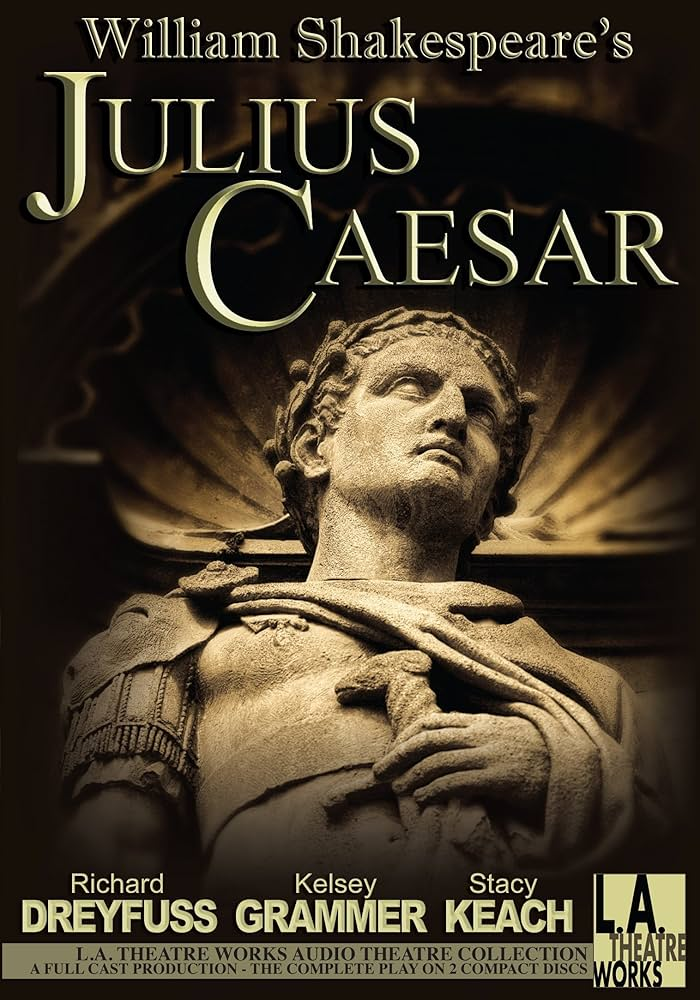
William Shakespeare, often regarded as the greatest playwright in the English language, was born in 1564 in Stratford-upon-Avon, England. His literary genius spans over 39 plays, 154 sonnets, and numerous other works that continue to influence literature, drama, and popular culture. Shakespeare’s ability to explore the complexities of human nature, power, ambition, and morality remains unparalleled. His tragedies, comedies, and histories reflect the intricacies of the human experience, making them relevant across centuries. One of his most famous tragedies, Julius Caesar, delves deep into themes of political ambition, betrayal, and fate, portraying the downfall of one of history’s most iconic leaders.
Julius Caesar: A Political Tragedy of Power and Betrayal
Julius Caesar is a historical tragedy written by William Shakespeare in 1599, based on the life and assassination of the Roman general and dictator Julius Caesar. Set in ancient Rome, the play dramatizes real historical events, exploring political intrigue, the consequences of unchecked ambition, and the fragility of power. Unlike other Shakespearean tragedies where the protagonist meets a tragic end, Julius Caesar presents a complex narrative where the line between hero and villain is blurred, making it a deeply thought-provoking play.
Plot Overview
The play begins with Julius Caesar returning to Rome after a victorious military campaign. His growing power and popularity spark fears among the senators, particularly Cassius and Brutus. Cassius, driven by envy and political ambition, manipulates Brutus into believing that Caesar’s rule threatens the Republic. Despite his inner turmoil, Brutus joins the conspiracy to assassinate Caesar, believing it is for the greater good of Rome.
On the Ides of March, the conspirators kill Caesar in the Senate, leading to one of Shakespeare’s most famous lines, “Et tu, Brute?” Caesar’s death, however, does not restore the Republic. Instead, it plunges Rome into chaos. Mark Antony, a loyal friend of Caesar, turns the Roman public against the conspirators with his stirring funeral speech, leading to a civil war. In the end, Brutus and Cassius meet tragic ends, and the play concludes with the rise of Octavius Caesar, signaling the beginning of imperial Rome.
Themes in Julius Caesar
Power and Corruption
The play explores how political power can lead to corruption and moral dilemmas. While Caesar is portrayed as ambitious, the conspirators, particularly Cassius, are driven by their own lust for power under the guise of protecting the Republic. The struggle between dictatorship and democracy remains a central conflict, resonating with contemporary political discourse.
Fate vs. Free Will
Throughout the play, Shakespeare raises questions about destiny and individual agency. The Soothsayer warns Caesar to “beware the Ides of March,” yet Caesar ignores the warning, leading to his downfall. Brutus, too, grapples with his decisions, believing he is acting out of free will, but ultimately, fate seems to govern their destinies.
Betrayal and Loyalty
The betrayal of Julius Caesar by his closest ally, Brutus, is the emotional core of the play. The phrase “Et tu, Brute?” encapsulates the shock and pain of betrayal. Mark Antony’s unwavering loyalty to Caesar, in contrast, fuels his quest for revenge, demonstrating the power of allegiance in shaping history.
Public Persuasion and Rhetoric
Shakespeare masterfully showcases the power of rhetoric, particularly in Antony’s funeral speech. Antony skillfully sways public opinion against the conspirators, proving that words can be as powerful as weapons in shaping political outcomes.
The Fragility of Democracy
The play serves as a commentary on the fragility of democratic institutions. The assassination of Caesar does not restore democracy; instead, it leads to further chaos and the eventual establishment of an empire, illustrating the unpredictable consequences of political upheaval.
Critical Analysis
Julius Caesar is a play rich in ambiguity, leaving the audience questioning whether Caesar’s assassination was justified. Shakespeare does not present clear heroes or villains, making the play an intricate exploration of human motivations. Brutus, often seen as a tragic hero, is portrayed as noble yet flawed. His idealism blinds him to the political realities of Rome, making him susceptible to manipulation. His downfall is a result of his internal conflict between personal loyalty and public duty.
Cassius, on the other hand, represents a more Machiavellian figure, driven by personal envy rather than genuine concern for the Republic. His ability to manipulate Brutus showcases the dangers of persuasion without moral integrity.
Mark Antony emerges as a master of rhetoric and political strategy. His ability to turn the masses against the conspirators highlights the power of oratory in shaping history. His famous speech, “Friends, Romans, countrymen, lend me your ears,” is a prime example of how carefully crafted words can alter the course of events.
Moreover, Julius Caesar remains relevant in modern times, drawing parallels with political assassinations, power struggles, and the unpredictability of revolutionary movements. It raises important questions about the nature of leadership, the ethical dilemmas of rebellion, and the consequences of political manipulation.
Symbolism in the Play
The Ides of March: A symbol of fate and inevitable doom.
Caesar’s Ghost: Represents guilt, fate, and the lingering consequences of actions.
Blood: Symbolizes betrayal, sacrifice, and the price of political ambition.
Conclusion
Julius Caesar is more than just a historical play—it is a timeless reflection on power, morality, and human ambition. Shakespeare’s exploration of political intrigue, rhetorical mastery, and the complexities of leadership makes the play a profound commentary on governance and the consequences of political actions. The play’s relevance in contemporary times proves Shakespeare’s unmatched ability to capture the essence of human nature and the cyclical patterns of history.
For readers and audiences alike, Julius Caesar serves as a reminder of the intricate balance between power and responsibility, making it one of Shakespeare’s most enduring and thought-provoking tragedies.
References:
Shakespeare, William. Julius Caesar. Maple Press, 2023.